Fast. Free. No impact on credit score.
Bridging Loans
Fast. Free. No impact on credit score.This won’t affect your credit score
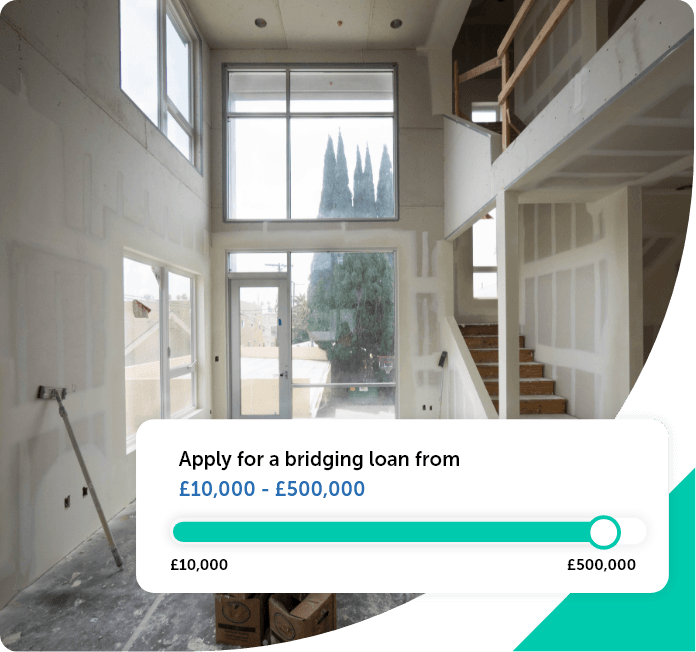
A bridging loan is a type of secured, short-term financial solution that helps to bridge the gap when you need funds quickly, often to purchase a new property before selling your current one.
They are commonly used by landlords and developers but can also be suitable in other situations where immediate access to funds is required. As they're short term, bridging loans can have higher interest rates than other types of lending, such as mortgages, and these are often presented as monthly rates rather than the more common annual percentage rate (APR).

There are multiple types of bridging loans available, compare the loan types below.

Residential bridging loans offer short term funding secured on a property. They suit purchases, chain breaks and refurb work, and can also be secured on the property being bought.

Commercial bridging loans are secured against commercial (or semi-commercial) property. They offer a short-term, high-value finance option.

Land bridging loans are a quick finance solution for the purchase of land. They’re ideal for time-sensitive land purchase opportunities for the development of properties.

Property refurbishment bridging loans provide short-term finance for refurbs and conversions. They suit time-sensitive work, including auction purchases, and are designed to complete quickly, often within a 28-day window.

As bridging loans are typically seen as a faster way to access finance, they can be appealing to those buying auction property. For example, if you’re adding to your property renovation portfolio and have identified an auction house you’re interested in, a bridging loan could offer the right flexibility for this purpose. This is especially the case as many auction house purchases require full payment within 28 days as well as immediate payment of a 10% deposit.
If you’re considering a bridging loan to purchase an auction property, think about the following steps:


Both bridging loans and traditional mortgages are types of secured loan. This means the property is secured against the loan and is used as 'collateral'. Although both are types of secured loan, there are some key differences.
Often used when you are waiting on the sale of a property to go through, to cover costs and ensure no delays. It can help you break the chain of moving house, ensuring the sale doesn't fall through. This gives you the funds to move things along. A bridging loan is a short-term solution and the debt is paid through the eventual proceeds of your sale.
Usually repayable over 20 to 30 years. A mortgage application can be a lengthy process, making it less ideal for a seamless and quick property purchase. Mortgage applications are thorough, meaning multiple credit checks may be carried out and the affordability for your income will be assessed. All of this takes time which does not make it a suitable option if you are making a quick investment in a property to renovate and resell for example.

Bridging loans can be useful in the right circumstances, offering a number of benefits that make them an attractive option for many. However, they aren’t right for everyone, so it’s important to weigh up both the advantages and disadvantages before deciding if a bridging loan is the best choice for you. Explore the advantages and disadvantages of bridging loans before deciding if they’re the right choice for you.
Bridging loan interest rates will cost you roughly 1-2% of the total size of your loan, though there are a range of fees to consider. These include:
Because the cost of a loan is individual to your particular circumstances, it's difficult to give a flat cost. The best way to estimate the cost of a bridging loan is with a bridging finance calculator.
Click apply for a bridging loan to start your journey
Fill out our online form for your personalised rates
Get the loan that best suits your circumstances
Whether a bridging loan is right for you depends on your situation.
It’s a short-term (often 3–12 months), secured loan, that can help you buy quickly, cover a chain break, or fund a refurbishment while you wait for a sale or remortgage.
Interest is higher than a standard mortgage and is usually charged monthly - this can be rolled up or retained so there may be no monthly payments. You’ll also need to budget for any fees, such as arrangement, valuation, legal and exit fees. Most lenders will ask for a clear exit plan, most often from the sale of the property or a remortgage once the work is done.
Remember, if the sale falls through or the remortgage isn’t approved, you will still need to repay the bridging loan.
Applying for any type of loan shouldn’t be taken lightly. We’re here to help you every step of the way. Once you apply, we’ll search hundreds of plans to find a loan that works for your situation. We work with a wide network of responsible lenders to provide the funds you need to secure your new property.
Bridging loans are mostly used for property-related purchases, to help get your foot on the ladder, such as:
You can use a bridging loan to redeem an existing mortgage, allowing you to purchase property even if you are still going through the process of selling your current home.
A bridging loan ensures developers have the finances to begin renovations and get the property back on the market in no time.
A bridging loan can be used to fund the development of a self-build project.
If you buy a house at an auction, you will need to provide the deposit upfront – this is where a bridging loan can help.
Some types of bridging loans are offered only when you have a firm idea of when you can repay the money – for example, if you are expecting a property sale within the next month, you can apply with the lender’s understanding that the debt will be repaid within 30 days.
You should think carefully before applying for this kind of loan if you do not have an ‘exit plan’ – as the interest tends to be much higher on a bridging loan, and is calculated differently to a typical APR.
You can get started with your application online. We will ask for a few details to begin your application, including the loan amount you require, personal details, and address.
Once these have been received, we will be in touch to find out more information about your situation. Have the details below to hand to ensure we can move your application along without any delay: